

01
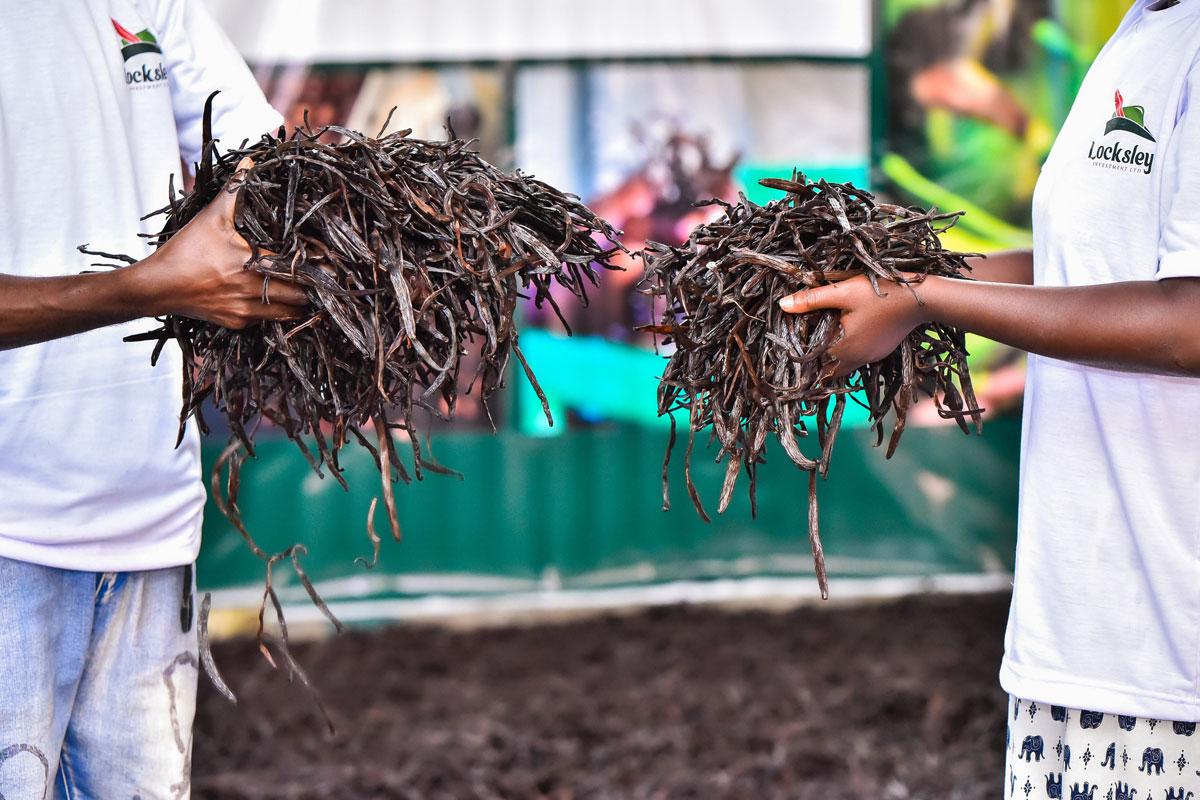
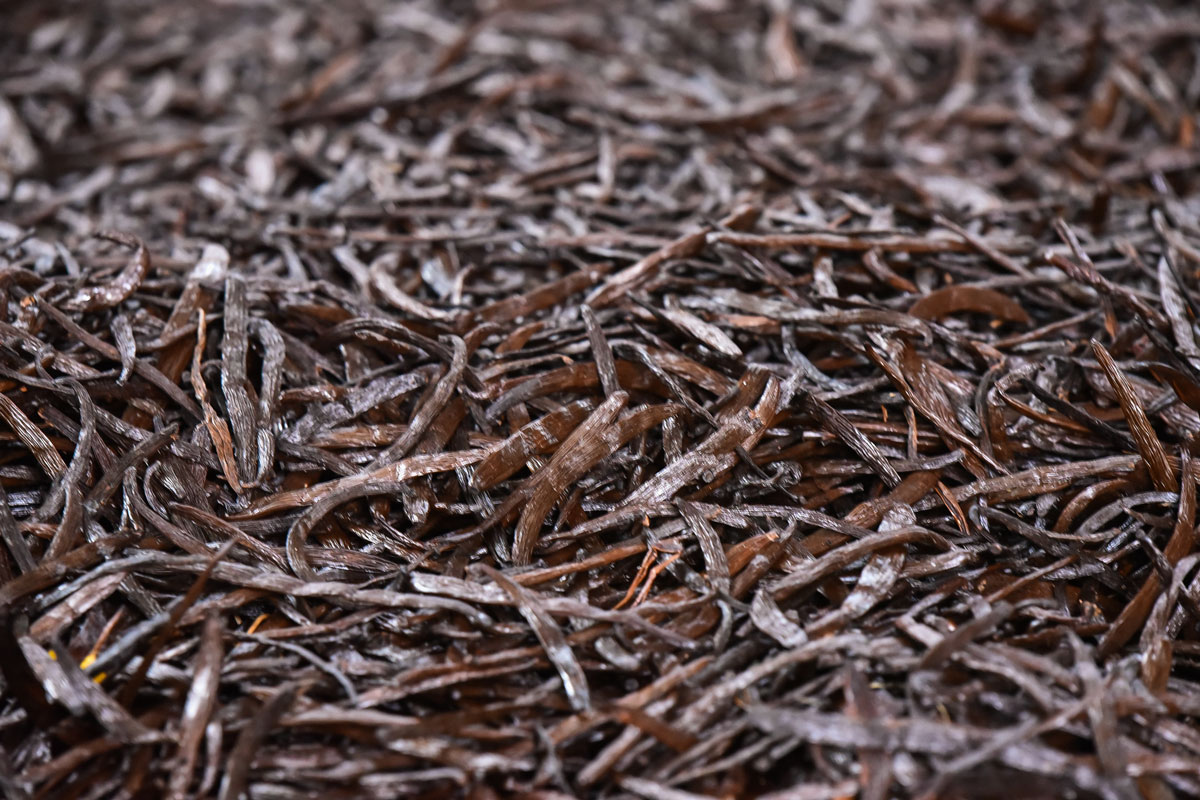
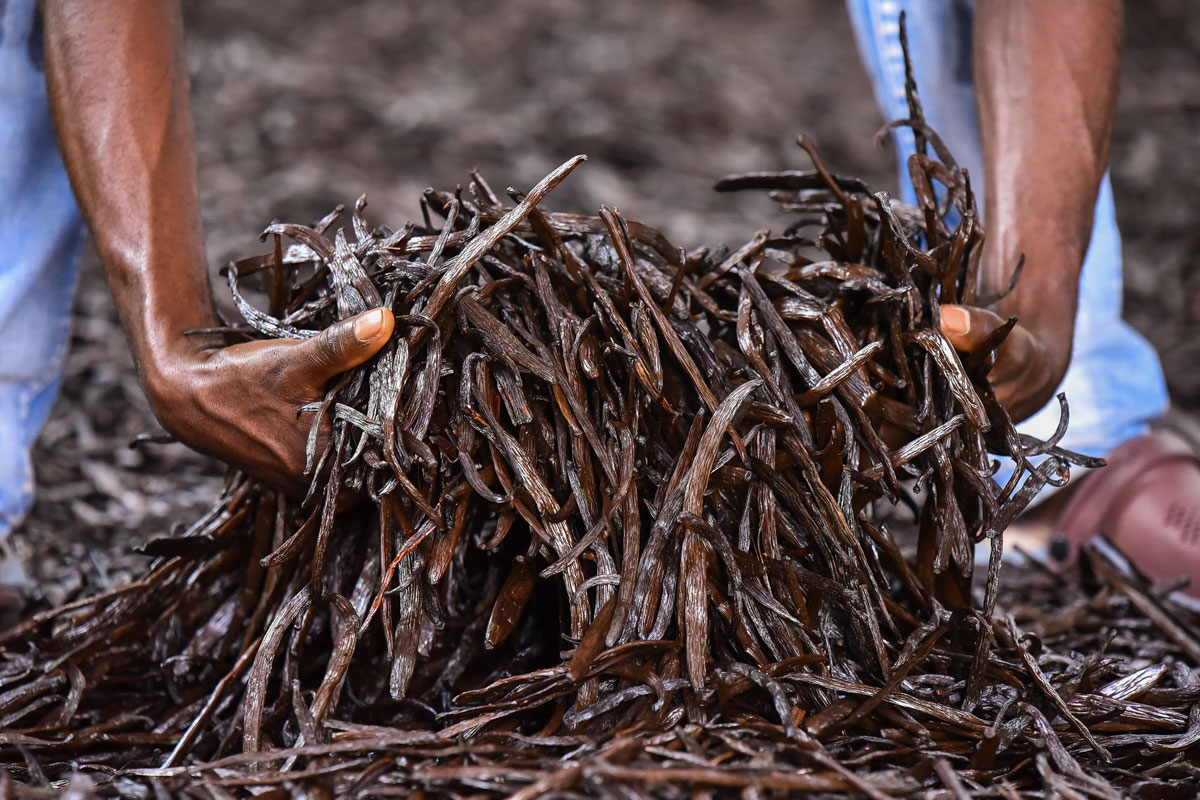
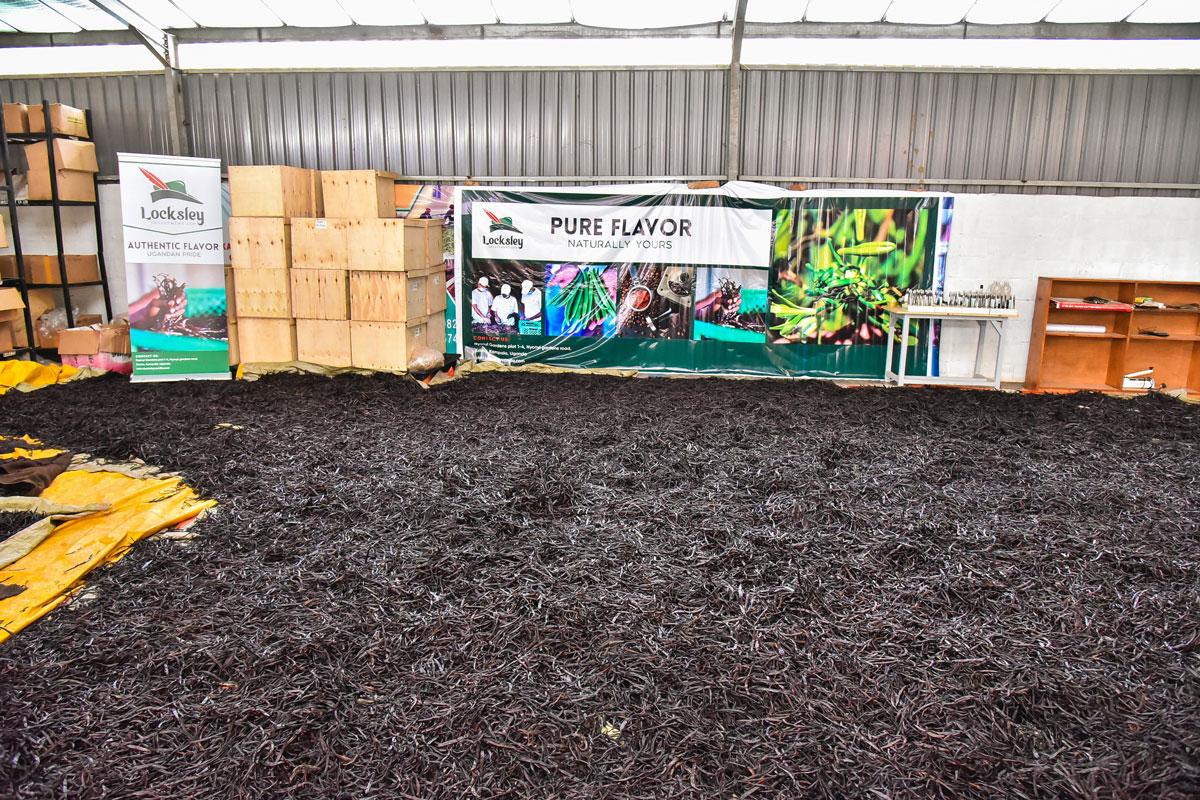
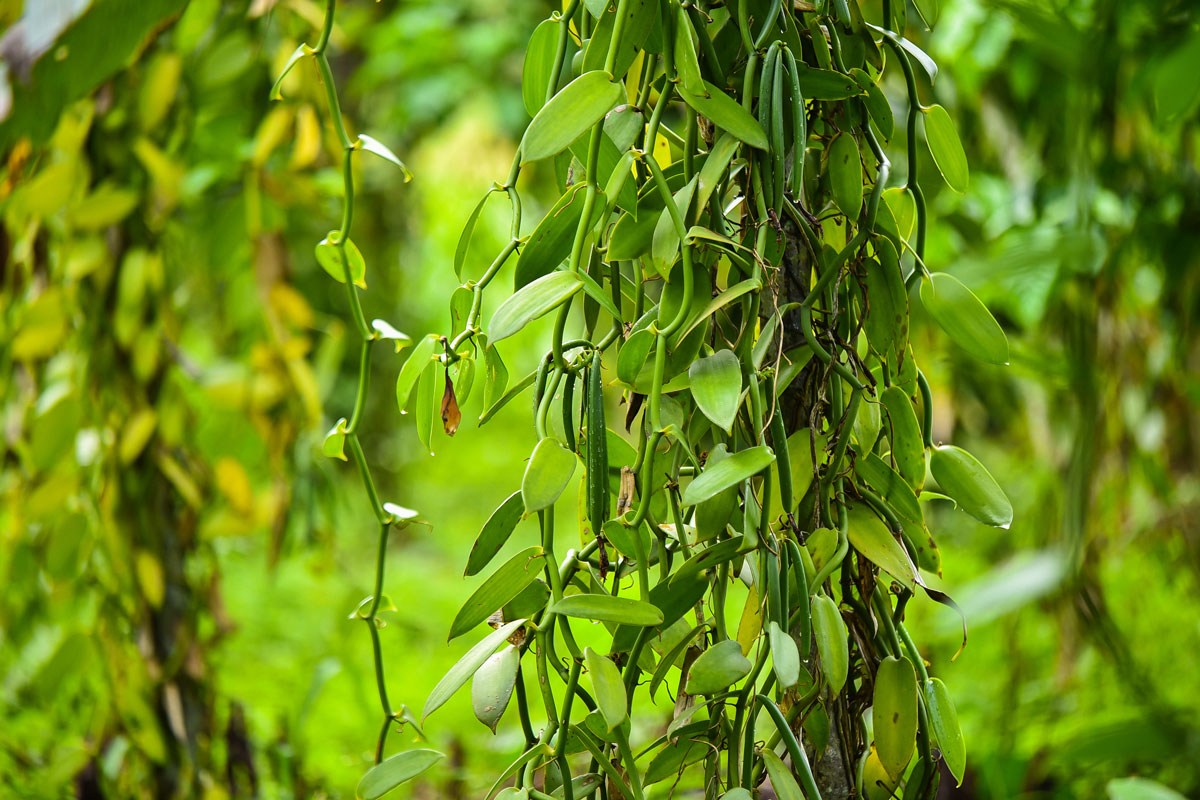
Vanilla Beans
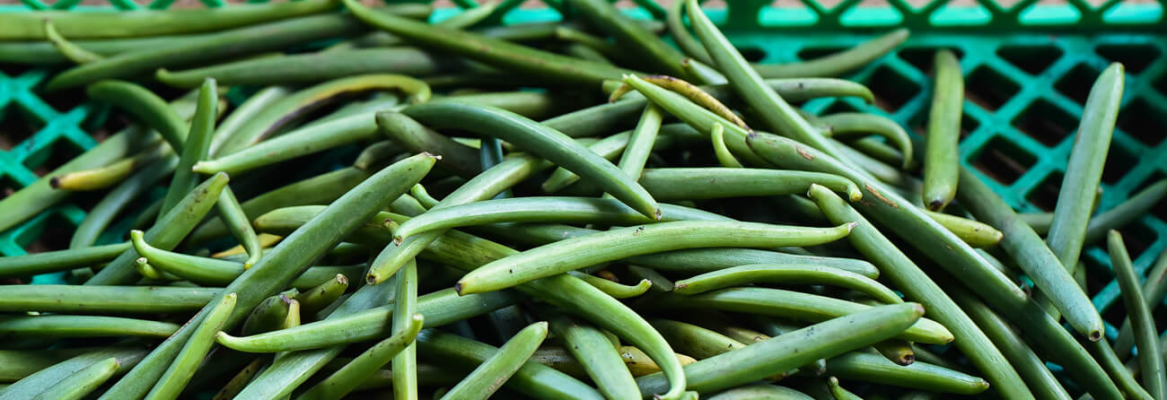
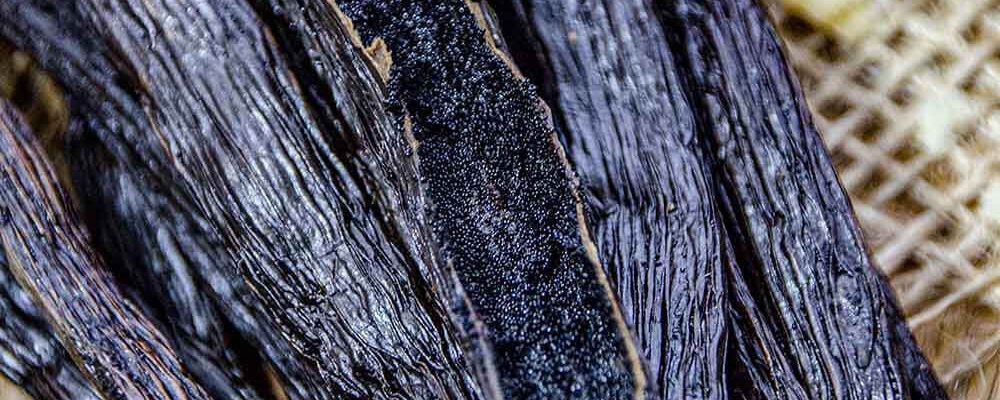
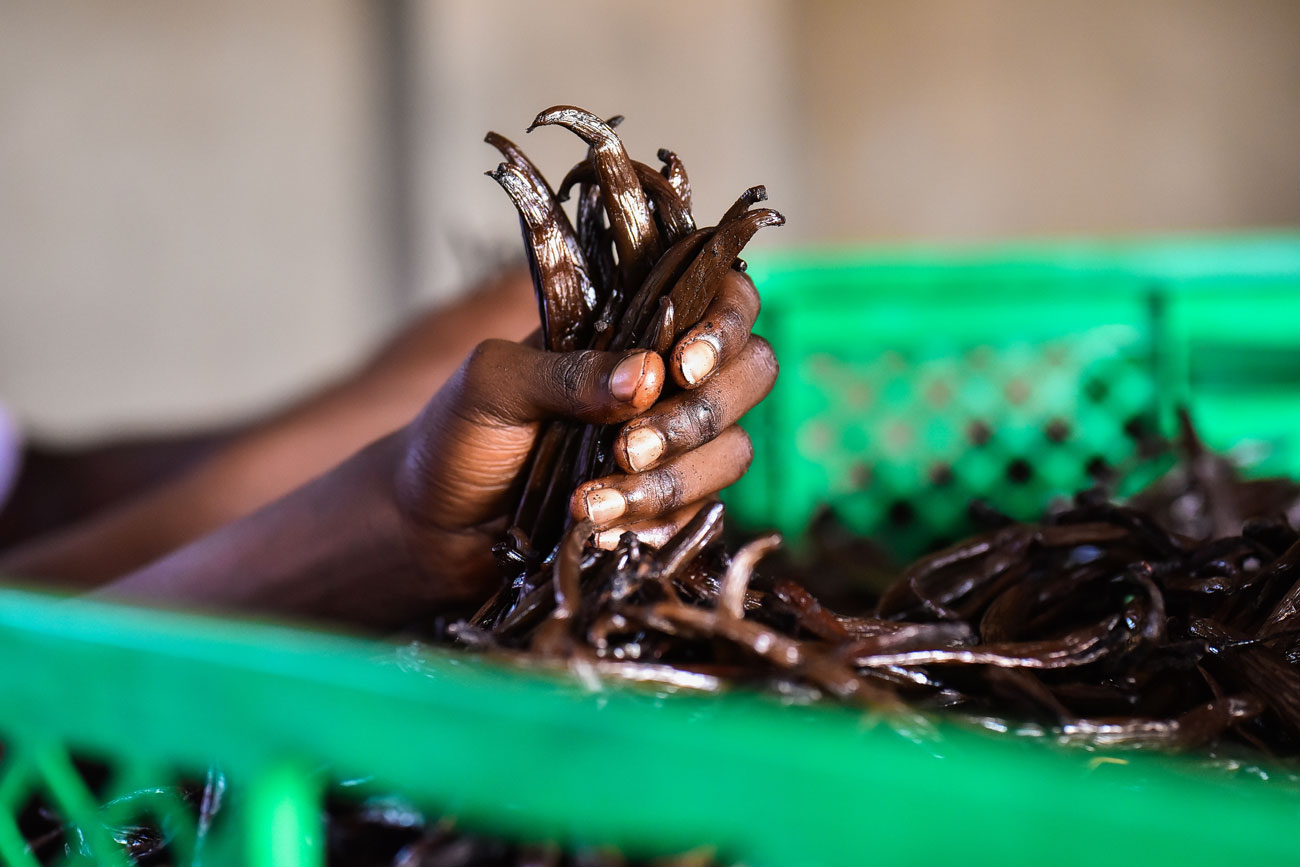
These are whole high quality pods used for for Extract Making, Baking, Cooking, Breweries, Cocktails
Vanilla Grades
Vanilla Specification
Gourmet Vanilla Beans (Grade A)
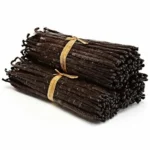
Moisture
28-35%
VANILLIN
1.8%
LENGTH
15-21cm
These are whole high quality pods used for for Extract Making, Baking, Cooking, Breweries, Cocktails
Extraction Beans (Grade B)
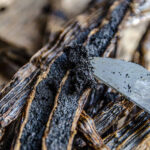
Moisture
28-35%
VANILLIN
1.8 - 2%
Grade B vanilla beans, are also used in baking and cooking, but they are not recommended for high-end desserts or dishes where the vanilla flavor and appearance are the main focus.
Split Beans (Grade C)
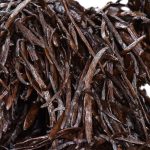
Moisture
16-24%
VANILLIN
2-2.5%
Due to the high vanillin content and low moisture percentages, the Red Splits are the ideal vanilla bean for extract making, or to use in process where moisture is less desirable and flavor is of up most importance.
Chopped Vanilla (Grade C)
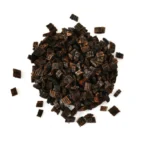
Moisture
16-24%
VANILLIN
2-2.5%
These are cut into pieces of vanilla beans used in bulk processing or for industrial applications.
Vanilla Powder
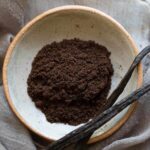
Moisture
7-10%
VANILLIN
1.6-2%
Pure vanilla powder made from vanilla beans can be sprinkled on baked goods like chocolate chip cookies, doughnuts, or toast for sweet, fragrant flavor.
Our Vanilla Process
Ugandan vanilla beans often fly under the radar, but they are a remarkable ingredient that deserves recognition. While some may compare them to Madagascar vanilla beans, it’s essential to focus on what makes Ugandan vanilla unique.
Harvesting
Vanilla beans are harvested by producers under the supervision of Peer Farmer Leaders.
The beans undergo an initial sorting to remove poor quality or undersized ones.
Transport To Buying Centers
The sorted vanilla beans are then transported to buying centres where they undergo a second sorting and weighing process.
Processing Plant
The selected vanilla beans are packed and transported to the processing plant of Locksley Vanilla. Special care is taken to maintain the organic integrity of the product and
prevent any contamination.
Processing
At the processing plant, the vanilla beans undergo cooking and sweating in designated
equipment for organic vanilla. They are then sun-dried on reed racks and stored in wooden boxes for slow curing and aroma development. Only healthy, mature beans are selected for further processing
Grading & Storage
The organic vanilla beans are graded by length and quality at different times to prevent
contamination. They are stored in clearly marked boxes in separate areas of the facility
until they are ready for export.
Overall, the production process ensures the integrity of the organic vanilla product and
prevents any contamination or co-mingling with conventional vanilla.
Cocoa Beans
Grade I
Mouldy Beans
3%
Max By counter
Slanty Beans
3%
Max By counter
INSECT-DAMAGED, GERMINATED, OR FLAT BEANS,:
3%
Max By counter
Grade II
Mouldy Beans
3%
Max By counter
Slanty Beans
3%
Max By counter
INSECT-DAMAGED, GERMINATED, OR FLAT BEANS,:
3%
Max By counter
Intro
| Ugandan cocoa Beans | Range |
| Moisture Whole Beans | 8% Max |
| Beans count/100 gms | 100%Max |
| Defects (mould+insect damaged) | 3.5%Max |
| Slaty | 3.5%Max |
| Flat | 1.5%Max |
| Sievings (any matter passing through a sieve round hole 5mm diameter) | 1.5%Max |
| 5 MM Diameter | 1.5%Max |
| Cocoa related matter (crm) (clusters+broken beans+fragments of beans & shell) | 3.5%Max |
| Foreign matter | 0.75%Max |
| FFA in cocoa fat in nibs | 1%Max |
Cashew Varieties
- White Wholes
- Scorched Wholes
- Desert Wholes
- White Pieces
- Scorched butts
- Scorched Pieces
Cocoa beans quality parameter specification:
| Ugandan cocoa Beans | Range |
| Moisture Whole Beans | 8% Max |
| Beans count/100 gms | 100%Max |
| Defects (mould+insect damaged) | 3.5%Max |
| Slaty | 3.5%Max |
| Flat | 1.5%Max |
| Sievings (any matter passing through a sieve round hole 5mm diameter) | 1.5%Max |
| 5 MM Diameter | 1.5%Max |
| Cocoa related matter (crm) (clusters+broken beans+fragments of beans & shell) | 3.5%Max |
| Foreign matter | 0.75%Max |
| FFA in cocoa fat in nibs | 1%Max |
Cashew Varieties
- White Wholes
- Scorched Wholes
- Desert Wholes
- White Pieces
- Scorched butts
- Scorched Pieces
Our Cocoa Process
Harvesting
Ripe cocoa pods are carefully handpicked from the cocoa trees. Harvesting is typically done twice a year to ensure maximum yield and quality
Pod Breaking
The harvested pods are opened manually to extract the fresh cocoa beans, which are embedded in a sweet, white pulp.
Fermentation
The beans are placed in wooden boxes or banana leaves and fermented for 5 to 7 days. This crucial step develops the cocoa flavor and reduces bitterness.
Drying
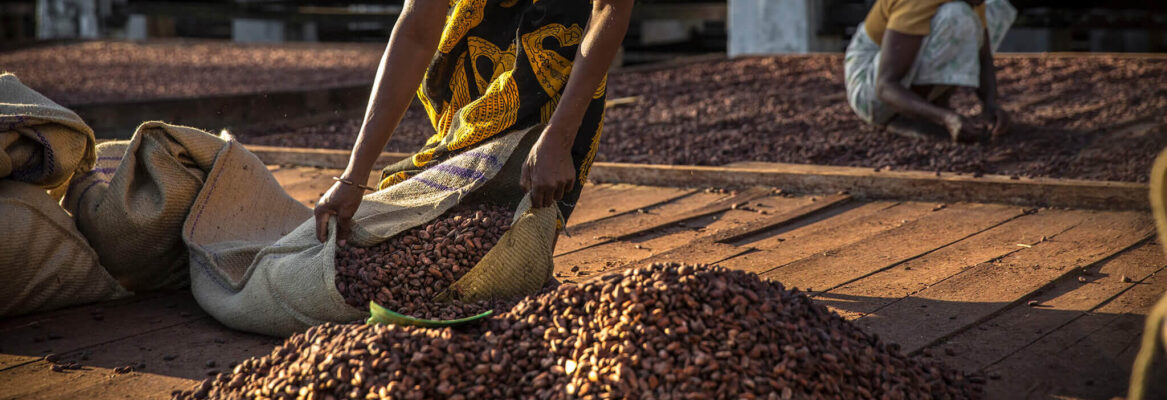
After fermentation, the beans are sun-dried for 5 to 10 days. Proper drying reduces
moisture content to safe levels and prevents mold or spoilage.
Cleaning & Sorting
Dried beans are cleaned to remove foreign matter and then sorted based on size, color, and quality. Only premium-grade beans proceed to the next stage.
Quality Control
Our team conducts quality tests, including cut tests and moisture analysis, to ensure compliance with international export standards
Packaging
The beans are packaged in food-grade jute bags that allow air circulation and preserve freshness. Each bag is labeled for traceability.
Export & Logistics
We manage documentation, certification, and shipping logistics to deliver our cocoa to clients worldwide on time and in perfect condition.
Cocoa Powder & Butter
Cocoa powder is a nutritious food which contains at the same time high-calorie fat, rich protein and carbohydrate.
Cocoa powder also contains certain amount of alkaloid, theobromine and theine. Their function is to dilate blood vessels and promote blood circulation. Cocoa products is very beneficial to human health
Natural coca powder 10/12% - Standard
- Colour: Brown
- Fat content: 10 -12%
- PH: 5.0 - 5.8
- Fineness: 97.0 MIn
- Moisture: 5.0% Max
Natural coca powder 10/12% - Standard
- Colour: Light Brown
- Fat content: 10 -12%
- PH: 7.2-7.8
- Fineness: 97.0 MIn
- Moisture: 5.0% Max
Cocoa powder is a nutritious food which contains at the same time high-calorie fat, rich protein and carbohydrate.
Cocoa powder also contains certain amount of alkaloid, theobromine and theine. Their function is to dilate blood vessels and promote blood circulation. Cocoa products is very beneficial to human health
Natural Cocoa Butter
| Parameters | Specification |
| Appearance | As per standard |
| Flavor | As per standard |
| Free fatty acid (%) | 1.75Max |
| Moisture | 0.20%Max |
| Iodine value | 33-42 |
| Peroxide value | 4.0Max |
| Saponification value | 188-198 |
| Unsaponification matter | 0.35%Max |
| Melting point (˚c) | 31-35 |
| Refractive index | 1.456-1.459 |
02
01
Coffee Beans
Robusta Coffee Grades (Uganda)
Robusta is the most widely grown coffee in Uganda and is generally graded as follows:
| Grade | Description |
| Screen 18 (SC18) | Largest beans, premium grade Robusta, used for export and specialty blends |
| Screen 15 (SC15) | Medium to large-sized beans, good quality, commonly exported |
| Screen 12 (SC12) | Smaller beans, average quality, often used in lower-end blends or local consumption |
| FAQ (Fair Average Quality | A common commercial grade – a mixture of bean sizes with moderate defects |
| UG/DEF (Uganda Defects) | Lower-grade Robusta with higher defect count; usually not exported |
Grading is often tied to physical inspection and moisture content (target 12–13%)
Arabica Coffee Grades (Uganda)
Arabica is grown at higher altitudes (mainly Mount Elgon, Rwenzori, and southwestern
Uganda and is graded by the Uganda Coffee Development Authority (UCDA) and
exporters as:
| Grade | Description |
| AA | Largest and best-quality beans; excellent cup profile; typically specialty grade |
| AB | Slightly smaller than AA, still good quality and flavor |
| PB (Peaberry) | Round beans formed when only one seed develops inside the cherry; rare and desirable |
| C | Smaller-sized beans, average cup quality |
| E (Elephant | Extra-large beans, sometimes split in processing |
| UG/DEF | Defective or low-grade Arabica, not for specialty markets |
Arabica grading also considers cup quality, involving sensory evaluation of:
- Fragrance/Aroma
- Acidity
- Body
- Flavor
- Aftertaste
- Clean cup
Cup grading categories (Both Types)
| Grade | Description |
| Specialty Grade | Exceptional quality, no primary defects, clean cup, distinct flavors |
| Premium Grade | Very good, minimal defects, consistent profile |
| Commercial Grade | Moderate defects, standard flavor profile |
| Off Grade | Numerous defects, unpleasant cup, mostly domestic use or rejected |
Note: Grading in Uganda is regulated by the Uganda Coffee Development Authority (UCDA),
which sets national quality standards for export and internal market control
Our Coffee Process
Harvesting
Hand-picked when cherries are ripe (bright red), selective picking is preferred to
maintain quality
Wet Processing (Washed Coffee)
- De-pulping: Cherries are passed through a pulping machine to remove the outer skin.
- Fermentation: Beans are soaked in water for 12–48 hours to remove mucilage (sugary layer).
- Washing: Fermented beans are washed to clean off all residues.
- Drying: Beans are sun-dried or mechanically dried to reach 10–12% moisture content.
Secondary Processing (Post-Drying)
- Hulling: Removes parchment layer from washed coffee.
- Grading: Beans are sorted by size, weight, and defects.
- Bagging: Beans are packed in jute or sisal bags (usually 60kg).
- Storage: Beans stored in dry, cool conditions to preserve quality.
Quality Control & Cupping
Moisture Testing (ideal: 10–12%), defect Counting and Cupping (sensory evaluation) for flavor, aroma, and body.
Export / Local Roasting
Beans are transported to exporters, roasters, or cooperatives.